
Most writing about AI for law firms asks whether to use it. A more useful question is which tasks it helps with, what it should never decide, and how to find out without taking a risk on a live matter.
The map
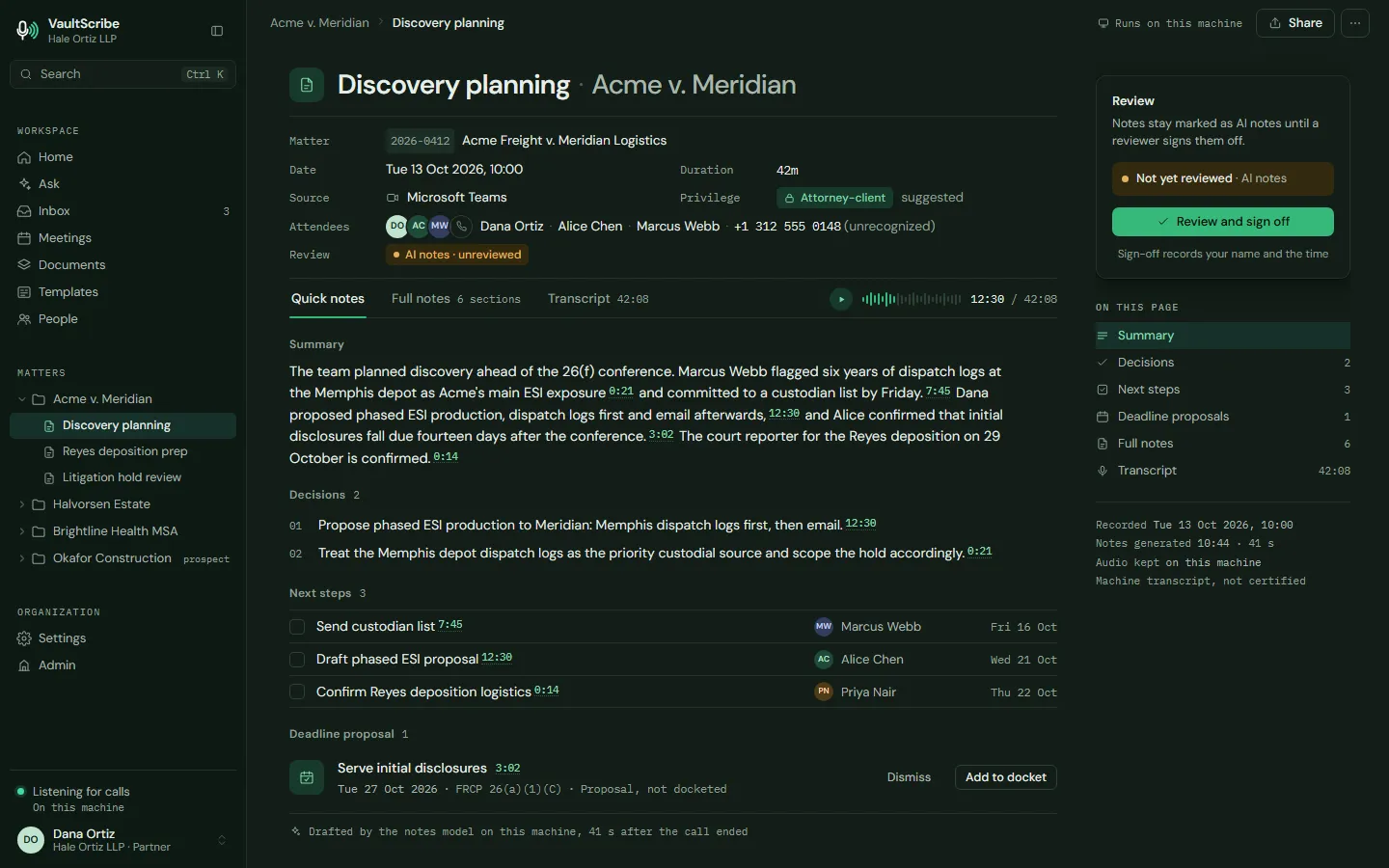
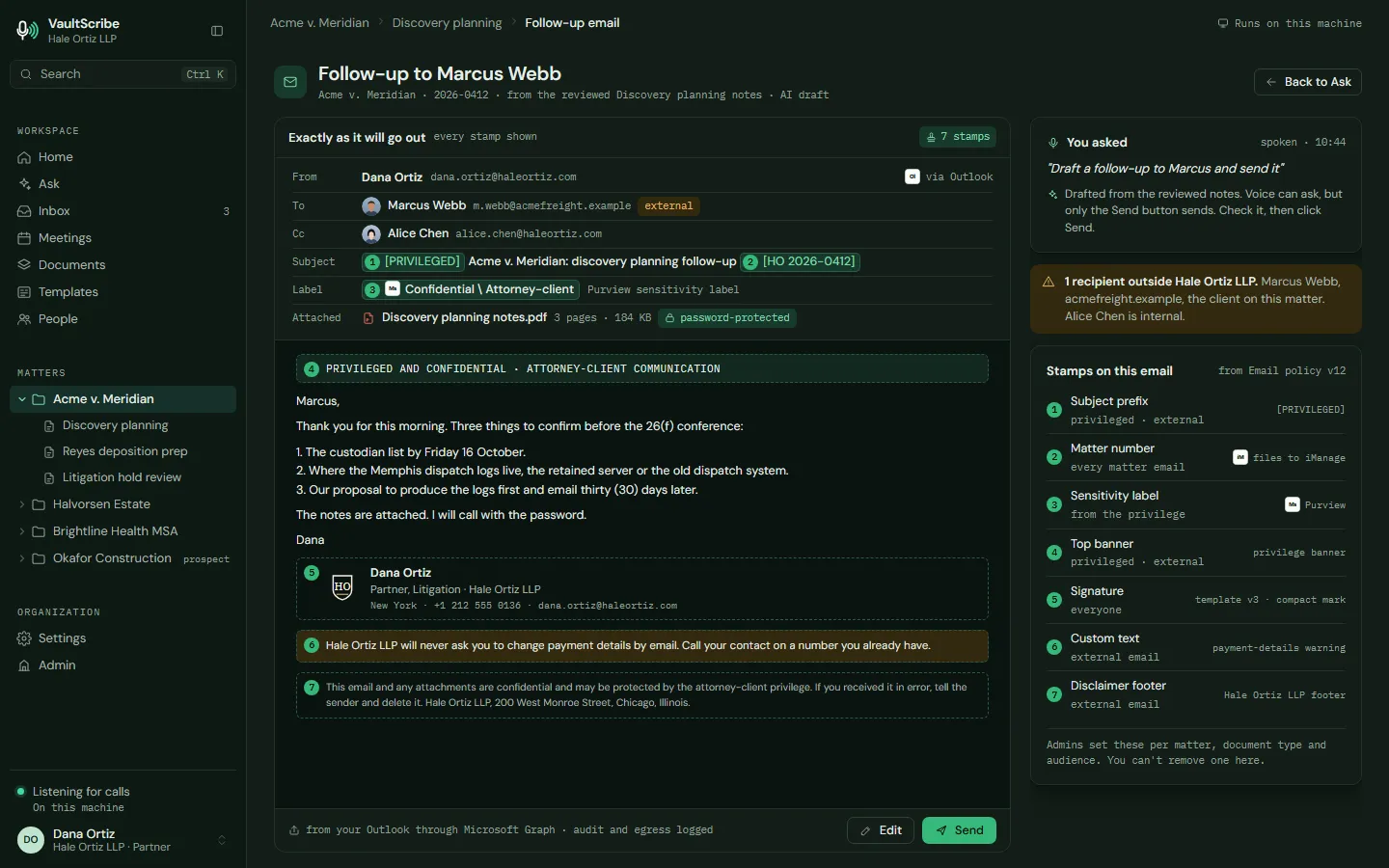
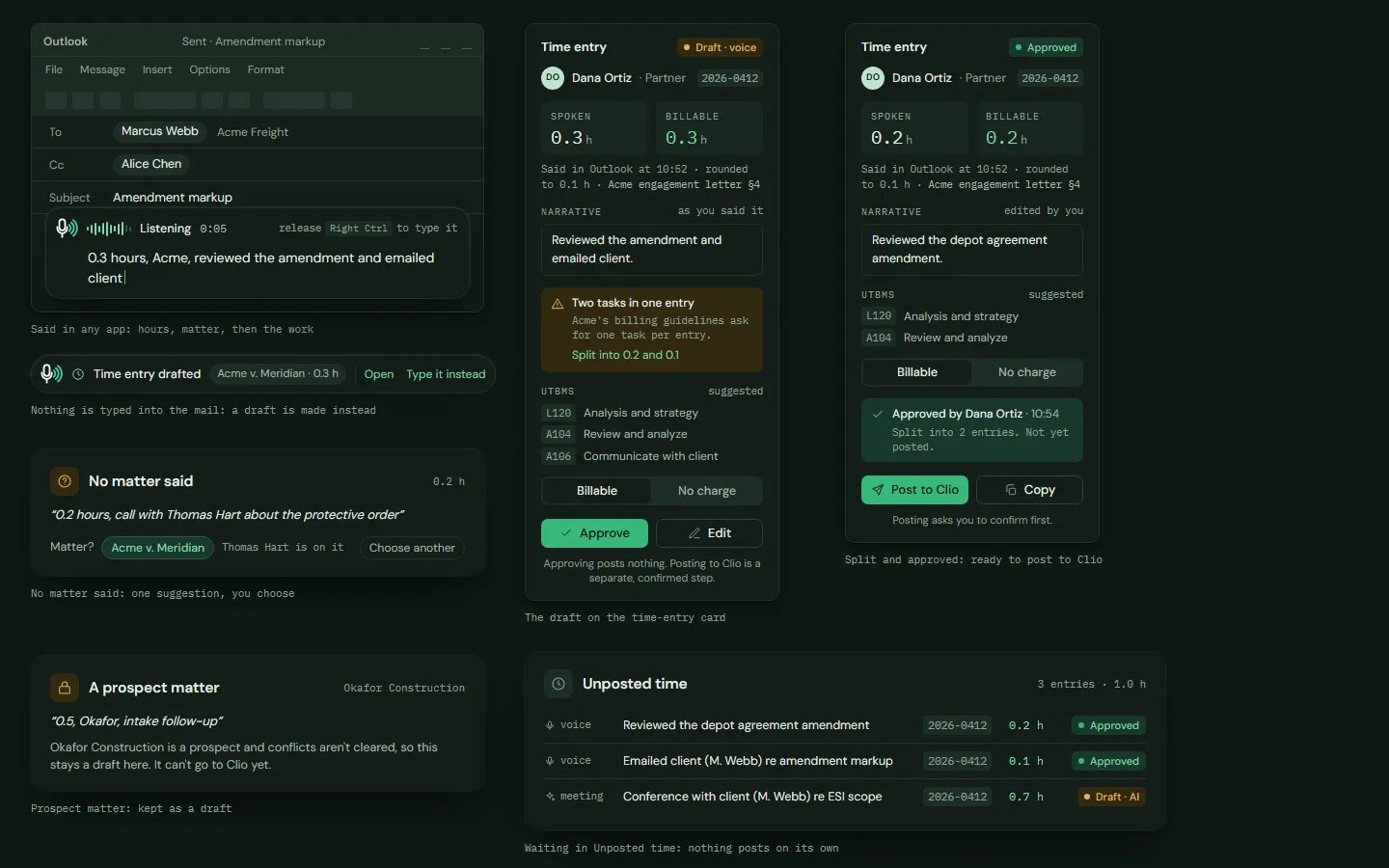
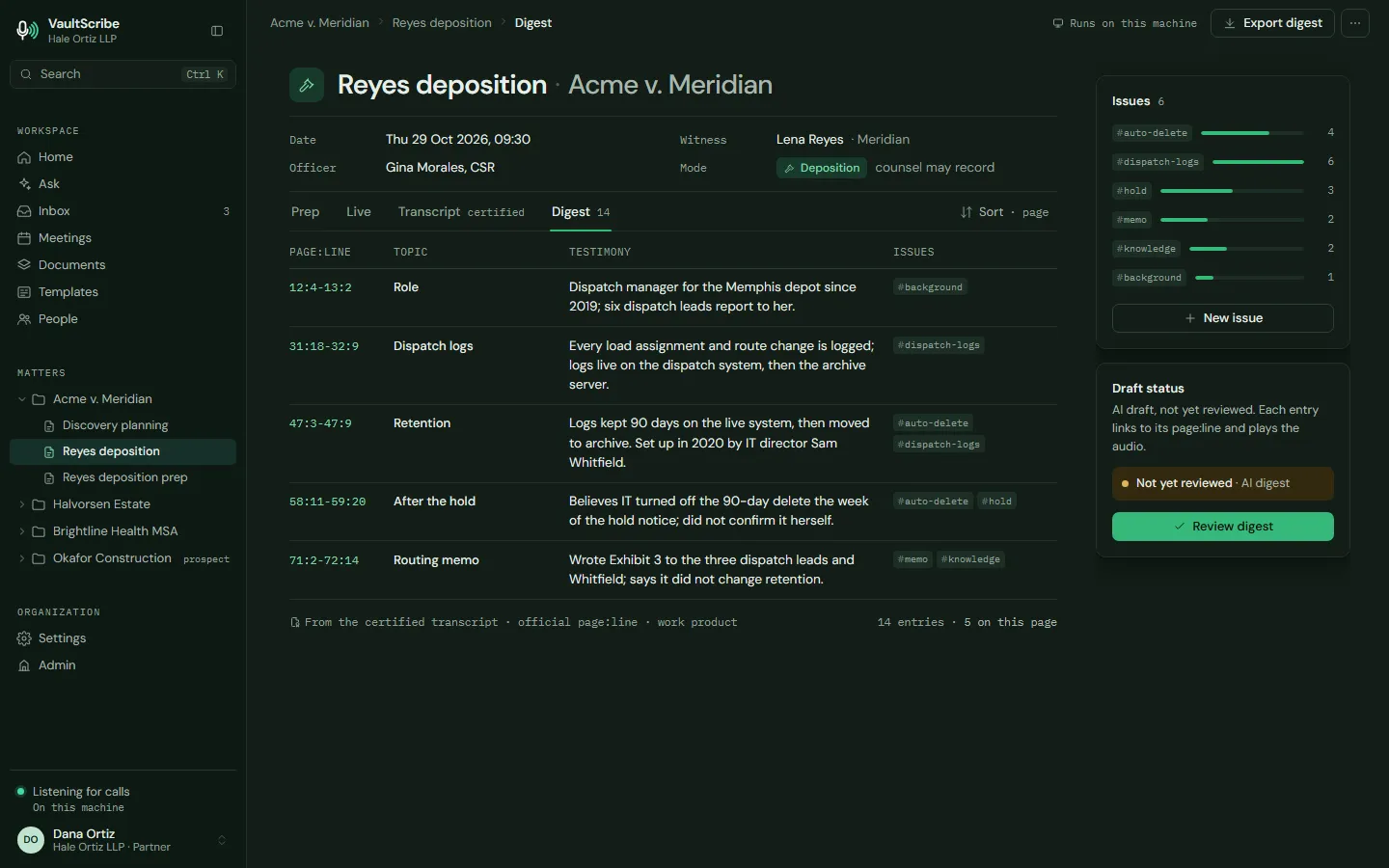
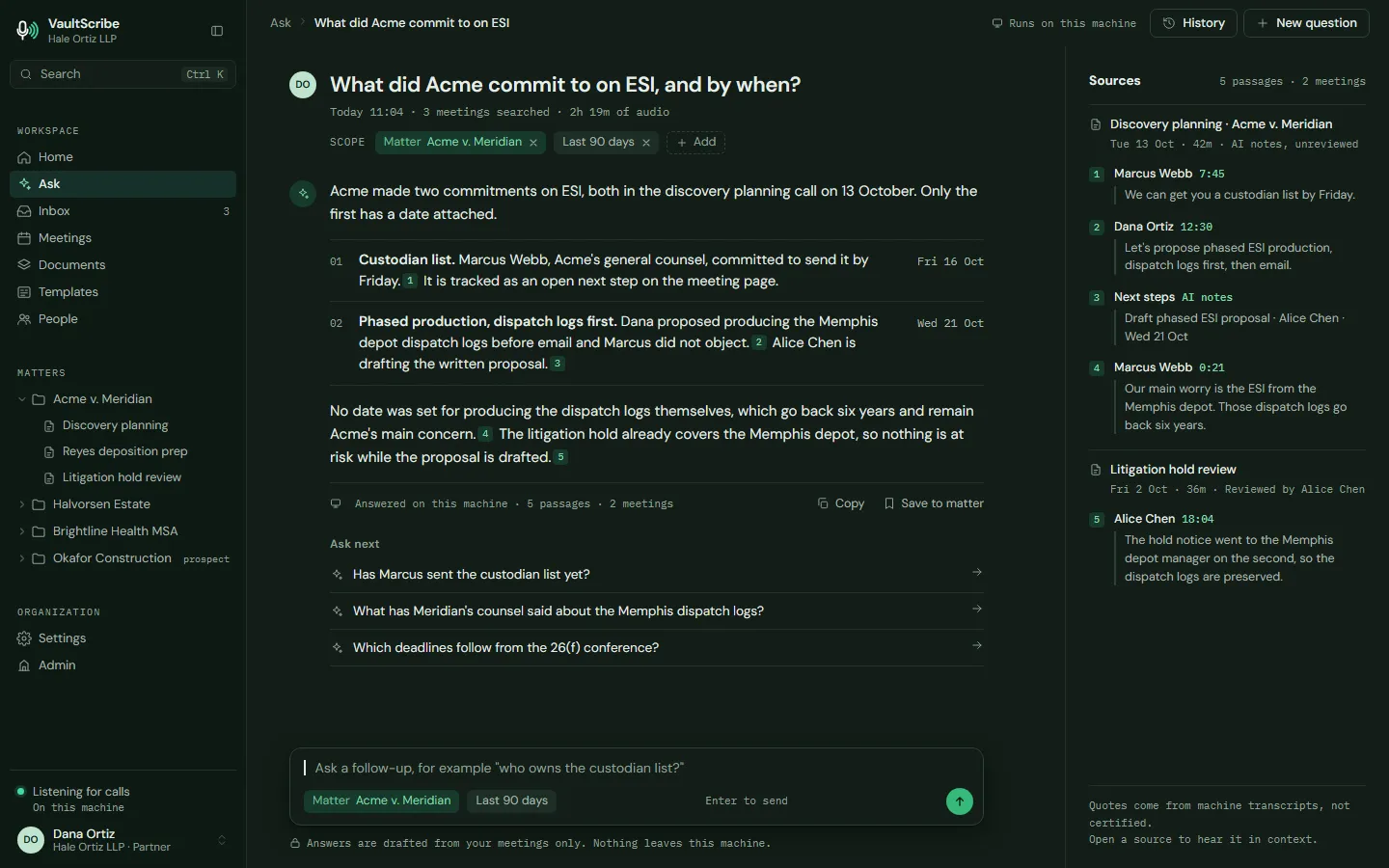
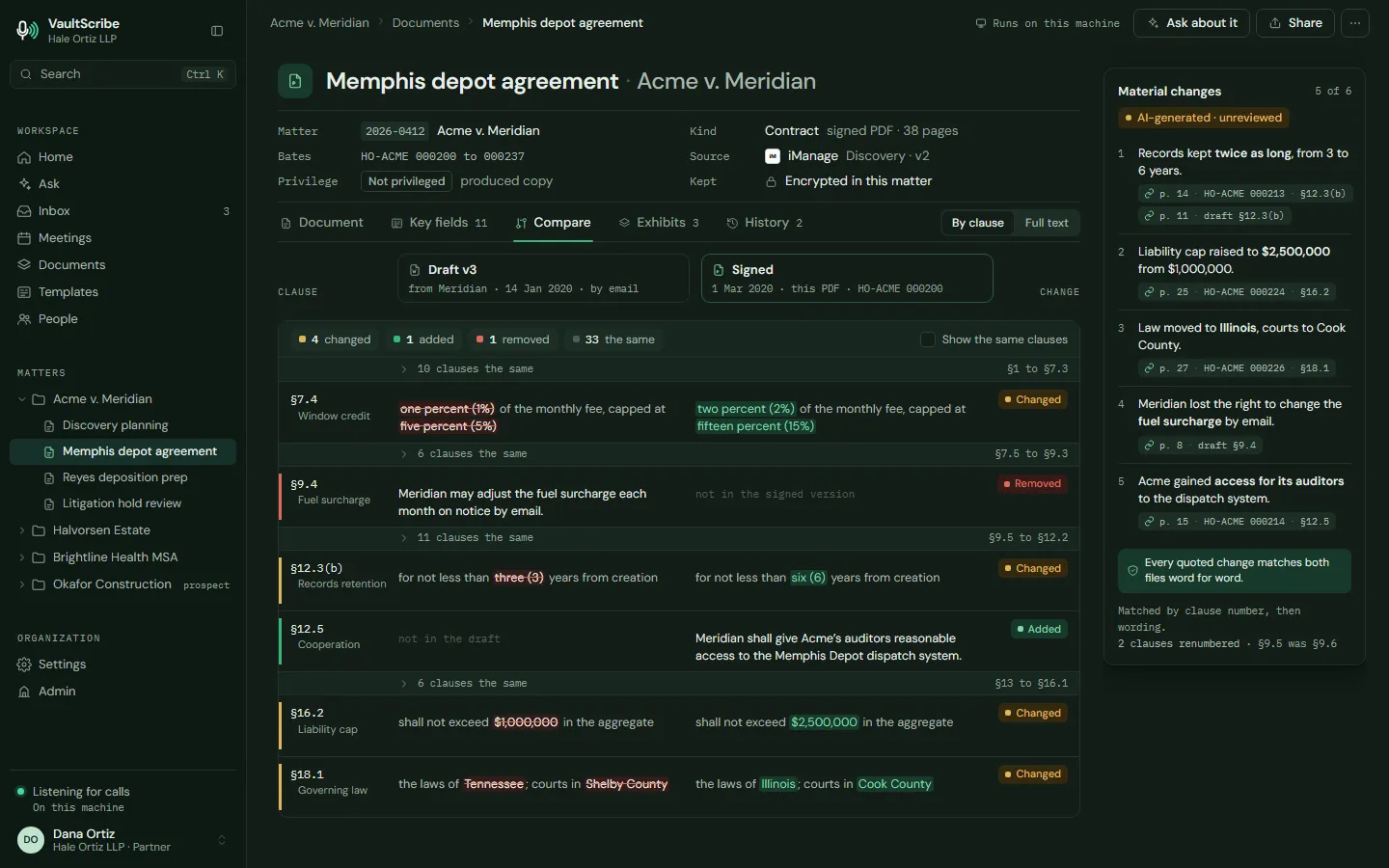
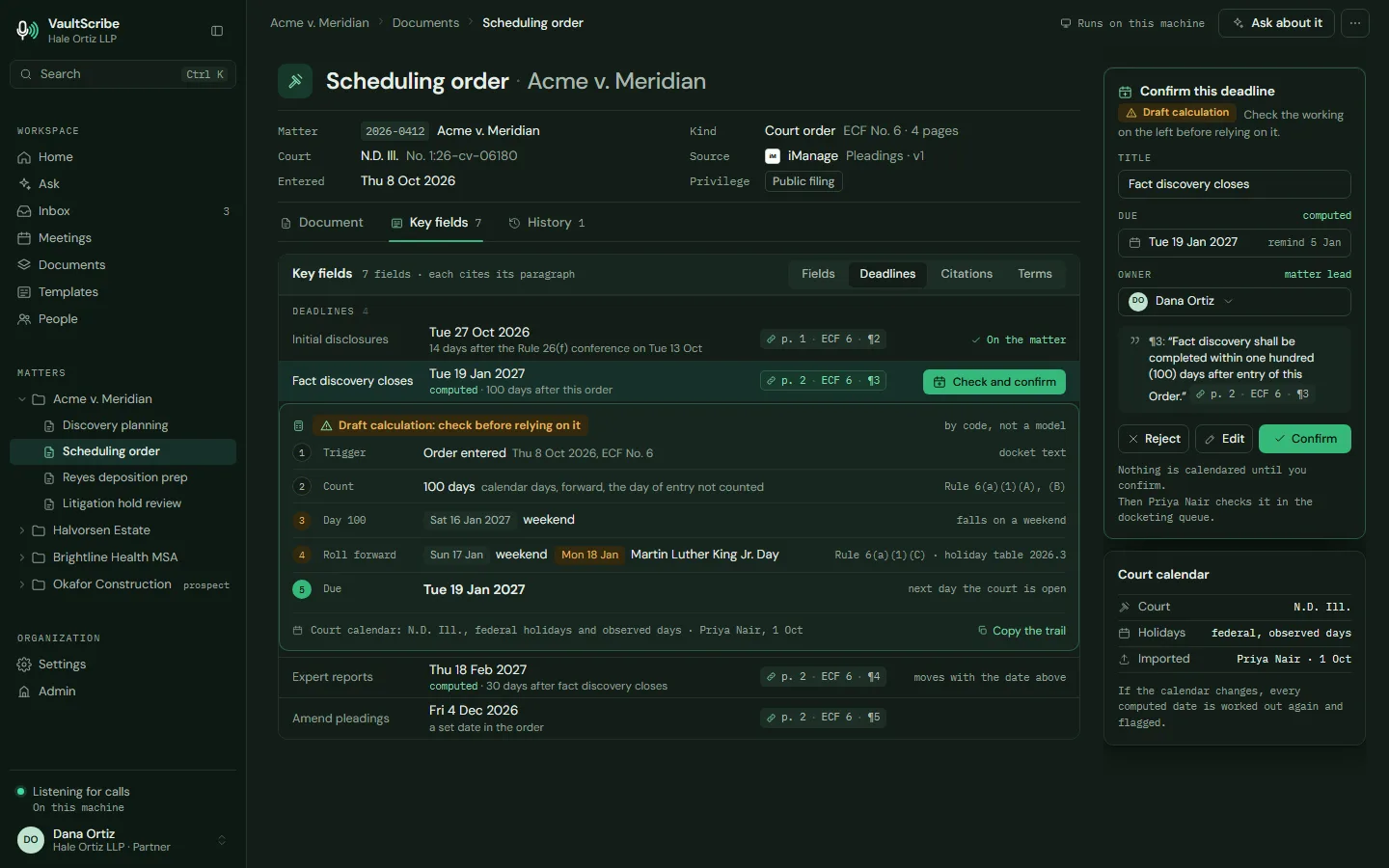
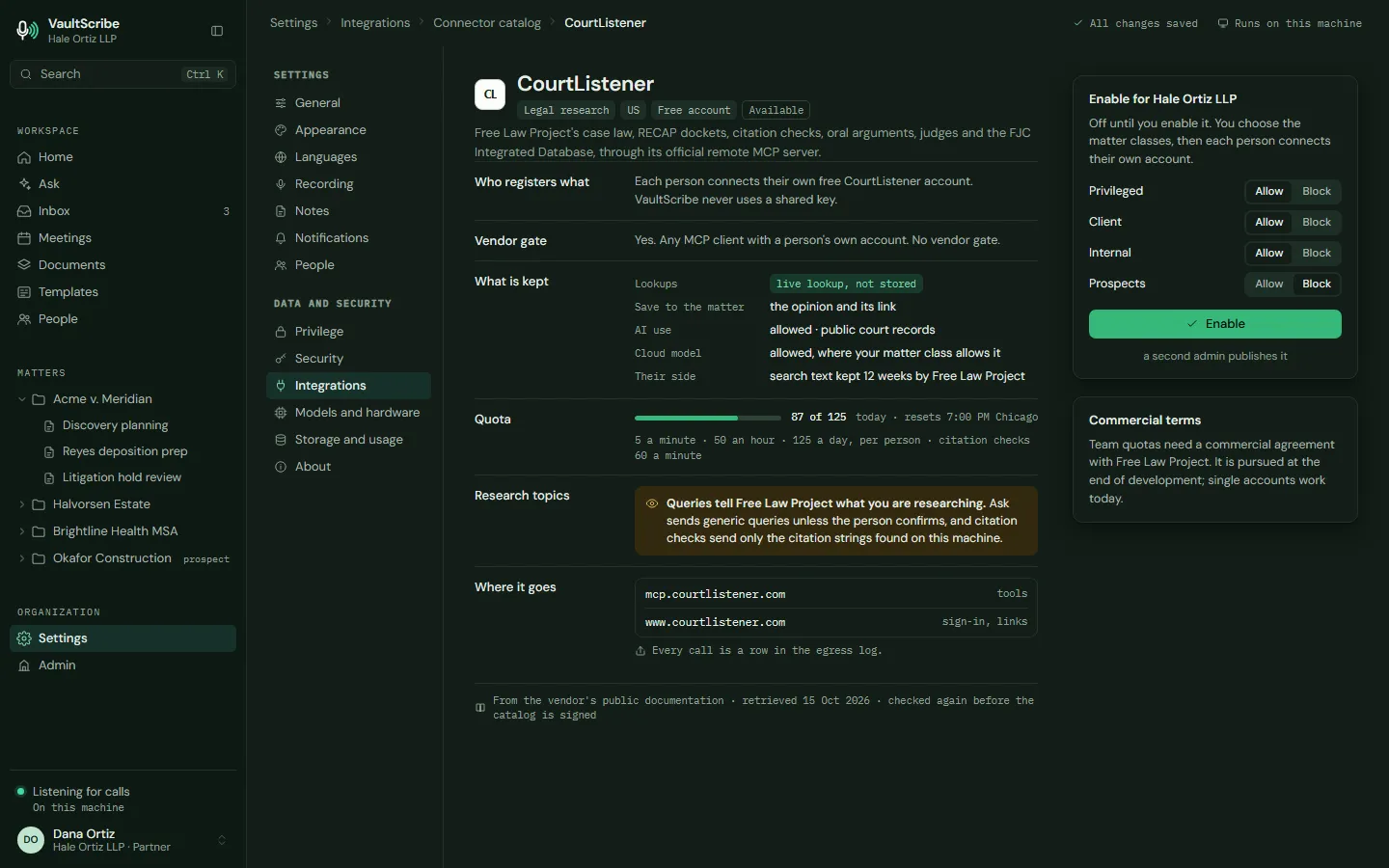
The same tasks, in the design
Here is how each row looks in VaultScribe. Choose a task to see its screen. The screens use sample data.
Two rules that hold for every row
- The lawyer keeps the judgment. The ABA's Formal Opinion 512 (July 29, 2024) says lawyers may not hand tasks that call for their own judgment to an AI tool. Read the opinion.
- The amount of checking depends on the tool and the task. The same opinion notes that a lawyer who has tested a tool on a small sample, by comparing its output to work already reviewed by hand, may have a reasonable basis to verify less on similar tasks later. It does not mean skipping review.
How a firm can start
- Pick one task that is frequent, boring and low risk, such as follow-up emails or draft time entries.
- Write the rules for it before anyone uses a tool: what may go in, who reviews, where the output is kept.
- Test on past work. Run the tool on matters you have already finished and compare the results to what a lawyer produced.
- Review everything at first, and loosen review only as the evidence builds.
- Add the next task, not the next ten.
Questions
What can AI do for a law firm?
It can help with the first draft of routine work: summarizing calls and meetings, drafting emails and letters, preparing time entries, digesting depositions, searching a firm's own files and flagging possible deadlines. A lawyer still checks the output and makes the decisions.
Will AI replace lawyers?
The ABA's Formal Opinion 512 says lawyers may not hand judgment tasks to an AI tool. AI changes how long drafting and searching take, not who is responsible for the advice.
How should a small law firm start with AI?
Pick one repetitive task, write down the rules, test the tool against work you have already done, and review every output at first. Expand only after the results hold up.
Read next
Legal AI agent for law firmsRead, draft and act as separate permissions, and where the agent stops.Where VaultScribe fits
VaultScribe is a private AI workspace for law firms, built for the first seven rows: notes, drafts, time entries, digests, cited search, comparison and proposed deadlines. For research, it connects to the research services a firm already subscribes to and does not provide licensed research content. I am looking for founding design partners, with a non-binding letter of intent and terms agreed on a call.
Related: Legal AI agent for law firms, Private legal AI and Security and architecture. General information, not legal advice. Transcripts from any tool are machine transcripts and are not certified.